Site Content

May 31, 2008

Helicopters and Hospitals

Landing helicopters on top of hospitals is not a good idea.

Landing a medical helicopter on a hospital landing pad can be a dangerous proposition under the best of conditions. Having a landing pad on top of your trauma center is flashy and exciting. All the TV shows do it! As we see in this story from the AP, when something goes wrong the outcome can be disastrous.

According to CNN, AP, and the local media coverage, Butterworth/Spectrum hospital in Grand Rapids, Michigan, endured a crash of a medical helicopter on the rooftop landing pad resulting in thick smoke and fire. According to the media reports several patient care floors had to be evacuated and power to the building had to be shut off. Surrounding roads and ground traffic were closed due to the threat of falling debris. According to available information at the time of this posting, there were no fatalities as a result of the helicopter crash. (Photo credit CNN.com)

Hospital trauma centers around the Nation utilize hundreds of air medical helicopter flights each day...safely...to bring trauma victims from emergency scenes to the trauma centers. There is little doubt that the appropriate use of air medical helicopters and trauma centers save lives that might otherwise be lost. Hospitals that have a need for air medical services can and should have designated landing pads (I think helispot is the correct term for those of you playing the NIMS home-game).

However, landing a helicopter ON TOP of a hospital is not a good idea...it never has been. This practice is flashy and dramatic, but not without risk. The crash at the Spectrum Hospital in Grand Rapids is a reminder of what can happen. As a result of this crash -several patient floors had to be evacuated -power to the hospital was disrupted -debris, smoke, and burning aviation fuel caused contamination and secondary hazard concerns, and roads were closed stopping surface traffic in the area. Beyond those issues, the "ripple effect" on a city or region include a drain on emergency response, surge issues on other hospitals as the Spectrum ED was closed (they are also the only level-one trauma center). Let's not forget that many major cities have hospitals in the in close proximity to other buildings and in the heart of the city.

Use air medical helicopters....yes, fly patients from rural areas to urban trauma centers...certainly, land the helicopter on the roof...no way. Landing in safe proximity to the hospital in a designated location is safer and can be nearly as efficient.

Consider the potential outcomes in the Grand Rapids crash and do a realistic risk/benefit analysis. The outcomes could have been much worse...and can be avoided.

May 14, 2008

To Live or Die in Disaster

The Associated Press is reporting on a panel of physicians who have made recommendations regarding who would and wouldn't get health care during times of disaster or catastrophe. The list is developed with the idea that health resources will be scarce or not readily available in times of crisis and the need for a more consistent method of triaging those resources. On the surface the idea has merit. The context and list-like approach are troubling.

The report recommends that each hospital have a team assigned in times of crisis to triage health care resources...note: resources is used synonymously with treatment. The triage team would have the sole responsibility of performing triage and utilizing the triage model...not a easy job when you consider those people meeting certain criteria (high risk of death) may not receive access to those resources. According to the list, you would not recieve treatment (ie: access to health care resources) if you have a high risk of death and a slim chance of long term survival. The following list is offered to define high risk of death and a slim chance of long term survival:
People greater than 85 yeas of age
severely burned patients greater than 60 years
Those with mental impairment...Alzheimers's disease
Those with chronic disease...heart failure, lung disease, or poorly controlled diabetes...

So, if you meet the above criteria or you have one of those conditions, there may be no care for you in a disaster. What do you think about that?

Although I totally agree that health care resources will be limited (if available at all) and a disaster situation will require health care rationing of some sort, I think this report is short sighted and not grounding in reality. Here's what I mean...

This scheme is not too distant from current triage modalities with one major exception...in triage we always base our decisions on the situation and a set of triage priorities. It is safe to say that those we choose not to work on in a triage situation are not conscious and those that are will be treated as expectant...note that I said treated here.

Was there any concern for facility safety when establishing this list? How do you expect to handle a situation when a family member is denied treatment based on this list while others are given treatment? Let's put it this way: if health care resources are going to be short, it is likely that law enforcement will be in short supply as well. It is reasonable to expect that families will show up at a hospital or treatment center as a unit...with expectations and conscious.

Lists such as the one suggested by this report may violate age discrimination or disability discrimination laws...I guess its one thing to make a decision on who gets what during a crisis...yet another thing to put groups of people on a list ahead of time.

Finally, when the public outcry and debate over this occurs (and I surprised it hasn't yet) emergency managers and medical personnel alike will be required to justify these actions and this list. That is not to say the the proposed triage model is wrong...just the way the list is presented seems to be a sticking point. The fact is that triage and health care rationing will occur by default as there is no way our current health care systems will continue to function during disaster or crisis situations. Hurricane Katrina taught us that lesson...and we haven't done much about it yet.

The best approach to the situation of health care in disaster situations is to prepare. Simple to say, far more difficult to do. In all reality, those groups mentioned on the list will receive some level of treatment in a disaster. A better plan may be to prepare community resources outside the hospital systems and place emphasis on dealing with special needs populations including shelter-in-place actions.

May 13, 2008

Go Home, Everyone


I've recently had the pleasure of attending Courage to be Safe - So Everyone Goes Home. This program is offered by the National Fallen Firefighters Foundation and was delivered recently in my home town via the New York State Office of Fire Prevention and Control and was, simply put, one of the most meaningful presentations I've been at in the last twenty-four years.

This program, delivered by Mr. Paul Melfi, struck me at the core as a father, firefighter, and officer. I had the pleasure of interviewing Paul on the Courage to be Safe program while he was in Rochester. You can listen to the preview, my commentary and the interview with Paul on Mitigation Journal: The All-Hazards Podcast shows 60 and 61.Courage to be Safe - So everyone goes home is based on 16 Firefighter Life Safety Initiatives...everything from personal and organizational accountability for health and safety to apparatus design...are summed up in the 16 initiatives.

What are you prepared to do? Find your State Advocate here and request a class for your department...now, do it now. Not a fire-based organization? Courage to be Safe easily translates to emergency medical service.

Of course I have a few of the 16 Firefighter Life Safety Initiatives that stand out and have special meaning for me. Among my favorite initiatives are #4 All firefighters must be empowered to stop unsafe practices this means that the newest probie to the most senior officer have to have the guts to get out of the old mindset "because we've always done it that way" ...and that will take guts. This also means that we have to adjust our egos, actions and policy to reflect innovative safe thinking. When it comes to empowering your personnel to look for and stop unsafe practices, we have to think in the long term...a cultural change.

If your a chief officer or department offical - find your state advocate and request a class, if your a firefighter - forward this info to your chief and push this class to your brothers and sisters. It may be the best thing you can do to save a life.

May 12, 2008

Meth Labs and Propane Cylinders

A recent warning from the National Propane Gas Association highlights additional dangers from the production of methamphetamine.

Anhydrous ammonia is a common ingredient in the production of methamphetamine and adds to the growing list of hazards found at incidents involving meth labs. According to a release (no pun intended) by the National Propane Gas Association, anhydrous ammonia has been found to be stored and pressurized in consumer-grade propane tanks. The safety alert notes that anhydrous will corrode a
nd deteriorate the brass service valves of a propane tank. The brass turns to a blue-green stain after exposure to anhydrous ammonia. There is no mention of time frame to failure/or quantity/concentration of anhydrous ammonia that will cause deterioration or failure of the service valve. It is noted that if the valve shows evidence of exposure to anhydrous ammonia it can't be trusted and it may be dangerous to move the cylinder. Valve failure may result in a violent discharge of the valve...resulting in injuries.

Many responders have been made aware of the dangers of meth lab incidents. We know to consider the chemical hazards as well and physical hazards at
these locations and to be mindful that meth labs exist in nearly every jurisdiction, even on the highway. We also know to consider ammonia of various types in refrigeration and fertilizing operations, as well as in the residential setting as used for cleaning and disinfection in the commercial setting.

The issue of improper storage of anhydrous ammonia and the potential for service valve failure is just the tip of the iceberg. Propane tanks that have had anhydrous ammonia stored in them may be found in retail centers, craft stores, or any other location that offers a trade-in circulation for consumer-grade propane cylinders. This situation has to be added to your pre-planning and situational awareness.

Click here for the Safety Alerts page of the National Propane Gas Association. All photos courtesy of the National Propane Gas Association.

April 28, 2008

Suicide by Blood Agent

A teen age girl in Japan committed suicide by creating deadly hydrogen sulphide gas in her apartment. The instructions for creating the chemical mixture was found on a computer in the apartment...apparently there have been a number of suicides/attempts since the internet information has been published. About 100 residents in the apartment building had to be evaluated following exposure. Other residents complained of respiratory distress and irritation.

This tragic story is yet another example of the Consumer-Level Hazardous Materials Incident. These events are created when routine chemical products are combined, intentionally or accidentally, to generate harmful chemical events. With all the focus on terrorism...we tend to forget about the common items we see everyday...and the impact they can have on our response.

In this case, Hydrogen Sulphide (H2S) was created by a mixture of readily available products (note: I am not listing the chemicals in attempt to keep people from doing this...if you're a responder and would like the information, please email me). H2S is a blood agent, meaning that it prevents the hemoglobin from functioning. Carbon Monoxide and Cyanide are other examples of blood agents. As an interesting note: cyanide is described as one of the least toxic blood agents. H2S poisoning follows the toxidrome of mucous membrane dryness, gasping, air hunger, respiratory failure, tachycardia and CV collapse.

In addition, H2S and a variety of other chemicals and acids can be produced by homemade chemical bombs. These types of events, intentional or accidental, can produce deadly outcomes. They can create the instant MCI and include worried well as well as actual exposure patients. Remember to consider decontamination of any patient exposed to a chemical liquid or gas.

More to follow.
Rick

February 10, 2008

Sudden Blizzard Causes MCI in Rochester, NY

Sudden blizzard-like conditions on Route 390 caused a forty-seven car pile up just outside of Rochester, NY. Details are still comming in, but at last count there were 27 patients transported, one surgical cardiac arrest.

All initial reports from those on scene indicate scene control and managment along with triage, treatment and transport were well done. The climate at the time of the event was 12 degrees F, with 20-30 mph winds.

Stay tunned to Mitigation Journal for more on this.

January 13, 2008

White Paper fails to make justification for FD-EMS

A review of the White paper - Prehospital 9-1-1 Emergency Medical Response
The Role of the United States Fire Service in Delivery and Coordination
shows shortsightedness on the part of some leaders.

This document points to the direction of emergency medical service in a fire service-based delivery model and highlights several benefits of that system. Although the document correctly notes the history and structure of the American Fire Service, it fails to achieve its self described mission; that “decision makers should recognize that the U.S. fire service is the most ideal prehospital 9-1-1 emergency response agency.” While this report makes several points many will find interesting, it lacks a comprehensive view of emergency medical service. Rather than accounting for the various aspects of EMS such as the provision of non-emergency and specialty care transport, the authors focus on only emergency response.

Emergency medical service is often considered as an ambulance only service. The public needs to understand the vital role of that first-response, non-transporting fire departments play in the total delivery of out-of-hospital care. Many fire departments provide both transport and first-response EMS with many of those being larger metropolitan areas staffed by career fire departments. However, with nearly 70% of fire departments being staffed by volunteer firefighters, the question is weather or not the fire service-based EMS transport model is sustainable. Numerous reports have indicated the need for more volunteers in any community.EMS has been cited as a drain on volunteer fire department resources and some departments only provide an emergency medical response to the most critical events.

The document also states that the fire service is the agency that first delivers on-scene health care services under the most true emergency situations and that “...it [EMS] has become almost universally, a principal duty of the fire service as well” and “fire service-based EMS systems are strategically positioned to deliver time critical response.” Its true that most if not all communities have a fire station strategically placed, usually near the center, of the population or a high-hazard area. While the traditional fire station may meet the needs of fire protection, I’m not sure the same structure is efficient for ambulance service. As population shifts occur at various times of day, the needs of a geographic area will also change. Ambulance services have practiced strategic staging of ambulances to meet changing needs of an area. Reliance on a fixed facility as a singe base of operation may not meet the daily changing needs of a community.

The report suggests that it is the fire service that provides the majority of medical services during emergencies that occur out of the hospital. What about the rest of the patient care cycle? Is the care and treatment provided during transport to be considered in a minority? These statements imply that once care is delivered on-scene (by fire department personnel), the patient needs only a ride. We know that this couldn’t be further from the truth. Patient conditions can change at any time...that’s why we continually reassess and examine.

The use of NIMS, the National Incident Management System, is also indicated as another reason for the fire service to have the lead role in the provision of EMS. However, NIMS compliance among fire departments is not universal. Although most, if not all, fire departments have adopted NIMS or utilize some form of incident command many are not fully NIMS compliant. NIMS is far more than an incident management system and encompasses an agency philosophy of management. Unfortunately, too few EMS ambulance services have taken the initiative to become NIMS compliant and embrace the concept in service delivery.

Ambulance sub-specialties are mentioned in the report and the reader is cautioned that these services “must not be confused with 9-1-1 emergency response.” I think this is one of the most disturbing comments I’ve ever heard. I we’re going to look at the global needs of EMS delivery, we have to included specialty care units like critical care transport. To exclude the specialty services is to fail to address the needs of not only the patient but the health care system as well. The emergency-only approach to pre hospital care is self-limiting and will not fulfill the mission of the fire service, the public, or the health care system.

Perhaps the most disturbing question asked in this report is “...what does a non-fire based EMS crew do on the scene of a motor vehicle accident when the care is engulfed in flames and occupants are trapped inside, and fire crews were not dispatched?” When did dispatch error become a justification for the fire service to provide ambulance service? Crashes with cars on fire a occupants trapped and similar situations are dangerous threats to civilian life and responder safety. The threat exists regardless of the availability of personal protective equipment. So, to answer the question of what non-fire based crew should do in these situations...let’s answer play your position and get the proper resources to the scene.

And what if we were to ask the question in another way? “What does a fire service based crew do with all the structural firefighting personal protective equipment and apparatus at the scene of a heart attack?” The fact is, that if we were to apply this line of thinking towards an overwhelming majority EMS response the fire department “emergency only” service would seem like a large expenditure with limited return.

My conclusion is that the report Prehospital 9-1-1 Emergency Medical Response: the Role of the United States Fire Service in Delivery and Coordination fails to make a valid claim that the fire service is universally the best provider of EMS. As I’ve attempted to point out in this summary, the delivery model that best serves a community is the best delivery system and that is certainly not a one-size fits all situation. The fact is that there are several delivery forms that will meet the needs and expectations of a community. The job is to evaluate, study and choose the best option for our individual area.

(a link to the original document can be found at www.mitigationjournal.com on the updates page)

January 5, 2008

Incident Safety Officers Crucial to Good Operations

Safety Officers Needed
Incident Safety Officers Crucial to Good Operations
Rick Russotti, CI/C, EMTP
rick@mitigationjournal.com

The role of the incident safety officer or ISO is about to expand. Although some refuse to acknowledge the importance of the incident safety officer’s position, a competent and proactive safety officer plays a crucial role in emergency scene management. All to often the assignment as incident safety officer is seen as a lack-luster job without the real importance of other positions within the command structure. Some departments continue to relegate the position of safety officer to personnel who are considered “exterior” or support personnel while others dedicate those members on light-duty to the role. Failing to understand how a incident safety officer fits into the command structure and what he or she represents on the emergency scene or fire ground can be that first domino in less then successful events.

Incident Safety Officers are more then safety or equipment Nazis. While it is true that the ISO should be helping to ensure the proper use of PPE and observe for potentially unsafe situations or acts, he or she must undertake an active role in ensuring other important duties are accomplished. All to often the ISO is seen as a nitpicky nag that keeps “real firemen” from doing their job. Unfortunately, when personnel are assigned to the position of incident safety officer as a matter of default (they’re the last one on-scene or they’re on light duty), the role diminishes in credibility as those personnel finding themselves in this role by default may lack the training and background to be effective. This highlights the need for the incident safety officer to have the background practical experience combined with a depth of knowledge of fire ground operations. This combination of knowledge and experience equates to credibility on the part of the incident safety officer.

Experienced firefighters and officers can and do operate as effective incident safety officers…usually in those departments who’ve embraced the position and added some level of acknowledgement within the command structure. Although every person on the fire ground have a responsibility to act in a safety officer capacity, those assigned to the role should have demonstrated comprehensive knowledge of department standard operating procedures as well as established firefighting strategies and tactics. In short, the practice of assigning an incident safety officer by default shortchanges the members working at an incident and deprives the incident commander of an invaluable resource.

As other functional areas such as personnel accountability and responder rehabilitation continue to expand, they should fall under the direction of the incident safety officer in the command structure. This is not to suggest that the incident safety officer should actually perform the duties, rather he or she should ensure that they occur according to department procedure. Consequently as the complexity and geographical scope of an incident expands, so will the need for additional personnel to be assigned to the safety group and deployed so as to manage the incident safety officer roles within the given areas. Additionally, rehabilitation and accountability group leaders should be reporting to the Incident Safety Officer. Rehabilitation and accountability are just two of the functional areas that should be under the direction of the incident safety officer.

December 2, 2007

Typhoid Mary: History for Today

Chances are that if you lived in the United States in early 1930’s you were concerned about numerous diseases that don’t have today’s media headlines. Typhoid Fever is one of those diseases which garnered much attention during that time in United Sates history, but today receives little or no attention. Although it lacks the marquee value of other diseases such as MRSA, smallpox, and anthrax, there are many lessons to be applied from the impact of Typhoid. One such lesson is that taught by Mary Mallon…better known as Typhoid Mary.

Mary Mallon (September 23, 1869 – November 11, 1938) has the dubious honor of being the first person in history to be a carrier of typhoid fever. Between 1901 and 1907 Mary Mallon held several positions with institutions and in private homes as cook. Many of the jobs were held here in New York State. During here working time she is alleged to have infected 22 people with typhoid fever and accused of the resulting single death. Typhoid illness and deaths spiked in her presence as she moved from city to city. The incidence of disease and deaths seemed to follow her from Mamaronek, NY to Manhattan to Long Island. It seems that within two weeks of Mary Mallon’s arrival, outbreaks of typhoid occurred.

Defending her innocence to the accusations of being a carrier of typhoid, Mallon refused to submit stool and urine samples in 1904, and in 1906 the possibility of a human carrier of typhoid was published in the June issue of the Journal of the American Medical Association. Later Mallon, now know by the popular Typhoid Mary name was taken into custody and held for three years. Her involuntary isolation came at her protests that the law was against her and claims of harassment because she was an Iris immigrant. She was eventually released on condition that not work with food, but took job as a hospital cook under an assumed name and infected twenty-five other people with typhoid. Two of those infected died. After this latest outbreak of typhoid, Mary “Brown” was discovered to actually be “Typhoid” Mary Mallon. She was arrested and re-admitted (involuntarily) for life-long isolation.

At the age of 69, on November 11, 1938, “Typhoid” Mary Mallon died of pneumonia. On postmortem exam, live typhoid bacteria was found in her gallbladder. Despite her overwhelming denial of her role in the typhoid cases and deaths, she in fact, produced the situations resulting in numerous cases and deaths from typhoid.

What relevance can we bring to today’s bio-security awareness society from Typhoid Mary? There are several historical points that should be considered. First, Mary’s situation was almost certainly unintentional. That is, Mary Mallon did not intend to harm anyone or spread disease. Would a change in the intent change the outcome or the circumstances of the situation? I think so. We have become accustomed to the “suicide bomber” scenarios played on the evening news. Consider the possibility of a “Biological Bomber”…a person who intentionally infects himself/herself with a disease in order to spread the disease and effect a bioterrorist event. Can you imagine the impact of one person infected with some disease walking into a hospital and contacting immunological suppressed patients, visitors, and health care workers?

And what if Mary was alive today and incarcerated on the suspicion of being a health carrier of a deadly disease; what would be said about her civil rights? Would public health authorities have the ability today to impose isolation? Think back to the media circus surrounding Mr. Speaker, the international traveler with extremely drug resistant tuberculosis. Can you imagine what would have happened had a fellow traveler contracted TB? Further, what will the effects be on society during an actual public health emergency? During a public health crisis I’m not convinced that the imposition of isolation or quarantine measures will be effective. During the Sever Acute Respiratory Syndrome (SARS) outbreak of 2003, the city of Toronto found that a majority of citizens voluntarily complied with social distancing. These high levels of compliance may be contributed to community education efforts and use of the modern media. With the SARS situation in mind, I am still skeptical that a similar outcome would be possible in the United States despite the Constitutional and legal ability to do so.

The Public Health Services Act (1944) provides for quarantine authority of the Federal government and authorizes “…apprehension, detention, and conditional release of individuals to prevent spread of communicable disease” This statute applies to persons infected with a communicable disease in a qualifying stage Title 42 U.S.C. Section 264 (Section 361 of the Public Health Service Act) gives the Secretary of Health and Human Services responsibility for preventing the introduction, transmission, and spread of communicable diseases from foreign countries into the U.S. and within the U.S. and its territories/possessions, and CDC has the authority to “detain, medically examine, or conditionally release individuals suspected of carrying a communicable disease” under regulations found at 42 C.F.R. Parts 70 and 71. Violation of a quarantine and isolation order is a federal criminal misdemeanor.

On April 4, 2003, at the request of the CDC, President Bush signed Executive Order 13295, adding SARS to the list of communicable diseases for which federal isolation and quarantine is authorized. And earlier in 2007, President Bush signed Homeland Security Presidential Directive 51 authorizing the Office of the President to declare and define “threats to continuity of government”.

The fact remains that during a public health crisis resources would be few and one has to wonder if quarantine would be possible at all.

References:
Preparing for Biological Terrorism: An Emergency Service Planning Guide. George Buck, Ph.D ISBN 1-4018-1094-2
Critical Care Study Guide. Criner/D’Alonzo ISBN 0-387-95164-4
Emergency Management: Principles and Practice for Local Government. ICMA ISBN 0-87326-082-1.
About.com:20th Century History. “Typhoid Mary” http://history1900s.about.com/od/1900s/a/typhoidmary.htm accessed Nov. 30, 2007
Typhoid Mary: Villain or Victim? Judith Walzer Leavitt http://www.pbs.org/wgbh/nova/typhoid/mary.html accessed Dec. 2, 2007
The Most Dangerous Woman in America. NOVA http://www.pbs.org/wgbh/nova/typhoid/ accessed Dec. 01, 2007
Women’s Health, Prevention works for women. Centers for Disease Control and Prevention http://www.cdc.gov/women/owh/wominspire/baker.htm accessed Dec. 1, 2007

October 27, 2007

Emerging Diseases and the Hygiene Hypothesis

The media has been full of stories warning the public of a new “super bug” that is threatening the health of our communities. Despite the advances in cleaning products, antimicrobial agent soaps, and an emphasis public health, these infectious diseases continue to thrive and seek out new targets for disease. In the late 1990’s West Nile Virus gained concern as the never before pathogen, spread by mosquito bite and carried by wild birds, began showing up in wild birds across the United States. Our awareness to biological agents was thrust to the forefront of our culture as a result of the anthrax attacks following 9/11. Avian flu, or H5N1, has had our attention on and off for the last few years as the hotly debated question of mutation and the possibility of pandemic is discussed. Several incidents of illness and death have been cited due to pathologic Escherichia coli (E. coli) O157:H7, and most recently, the so-called super bug Methicillin Resistant Staphylococcus aureus or MRSA.

Methicillin Resistant Staphylococcus aureus or MRSA, along with its counterpart ORSA (Oxacillin Resistant Staphylococcus aureus) have been nosocomial, or hospital acquired infections of concern for quite some time infecting the patient who has undergone an invasive procedure or the long term care patient with a compromised immune system. Hospital and other health care workers can become infected with ORSA/MRSA as a result of the performance of their duties. Health care providers may become infected with ORSA/MRSA by 1) contact with colonized or infected patients, 2) colonized or infected sites of the personnel (clothing or unprotected areas) and, 3) exposure to contaminated surfaces or items such as medical devices, or environmental surfaces. The good news is that practicing standard body substance isolation and good personal hygiene (hand washing) can prevent many of these exposures.

The question remains, however, as to why these diseases continue to flourish in a society rich with countermeasures such as anti-microbial soaps and cleaners. Why do they continue to evolve to resist traditional treatment and migrate to infect otherwise healthy people in the community?

Certain theories propose that cleaner is not always better. One such theory is the Hygiene Hypothesis which began circulation as a theory on the relationship between exposure to viruses and bacteria and the development of a healthy immune system around 1989. The Hygiene Hypothesis proposes that exposure to environments that are less than germ-free as an infant or toddler builds a stronger immune system and reduces the risk of developing disease later in life.
How can this be possible? It seems counterintuitive to claim that a more microbe-free environment is not automatically equated to better health. We can, in fact, look to a simple analogy of the immune system for a better perspective. Let’s compare the immune system to voluntary muscle for a moment. When voluntary muscle is stressed, as in the case of exercise, the muscle becomes stronger; the hygiene hypothesis is merely suggesting the same principle applies to the immune system. The exposure a young, developing immune system to repeated small doses of various virus and bacteria endemic to a given environment can be considered as exercise for the immune system. “That which does not kill us makes us stronger” may be a better name for the hypothesis.

Although debated, several findings suggest that early infection with certain bacteria have reduced the severity of later immune response to allergens in mice.
The Hygiene Hypothesis has been implicated as a factor in the rise of asthma and some community acquired immunologic diseases. Research suggests that our society’s overuse of anti-microbial/anti-biotic materials, such as cleaners and soaps, has caused people to be exposed to fewer diseases during immune system development. Scientists point out that asthma and other diseases linked to the immune system have been on the rise for the last 30-40 years despite exposure to fewer infectious organisms. The thought is that these organisms are a key component in training and creating a healthy immune system. Without early exposure, the developing immune system fails to respond at an appropriate level and may actually overreact to irritants that would otherwise be inconsequential. The result is an increased overreaction of the immune system equating to conditions such as asthma. Other research has indicated that children who are exposed to high levels of the bacterial compound, endotoxin, found in house dust may actually be less likely to develop eczema during their first year of life3. Finding such as this support the hygiene hypothesis by indicating that early exposure to infectious or inflammatory agents cause changes in the immune systems and reducing the risk of developing allergy-related conditions later in life.

The hygiene hypothesis remains unproven but continues to be tested by a variety of researchers. I think my analogy comparing the immune system to the voluntary muscular system make a lot of sense. For an immune system to work property it must be trained and experienced, but if training and experience is lacking, the immune system defaults to “going to war” when all that may be needed is to fire a single shot. Our approach to develop items such as anti-bacterial soaps is not entirely bad…I think the marketing and media hold much of the responsibility for this situation.

References
1.Bacterial Infections Alter Allergic Response; Findings Support Hygiene Hypothesis. Science Daily/national Jewish Medical and Research Center http://www.sciencedaily.com/releases/2003/02030225065721.htm accessed 10 October 2007 accessed 10 October 07
2.Bacterial toxin may protect infants from asthma. National Institutes of Health; Medical News Today http://www.medicalnewstoday.com/articles/10416.php accessed 10 October 07
3.Infants who have fevers become children with fewer allergies. National Institute of Allergy and Infectious Diseases; Medical News Today http://www.medicalnewstoday.com/articles/5797.php accessed 12 October 07
4.S.B. Levy: Antibacterial Household Products: Cause for Concern. Emerging Infectious Diseases vol. 7, No. 3 Supplement, June 2001 accessed via PDF 12 October 07
5.Erwin W. Gelfand, MD. The Hygiene Hypothesis Revisited: Pros and Cons from Selected Coverage of the 60th Anniversary Meeting of the American Academy of Allergy, Asthma and Immunology accessed 13 October 07 via Medscape http://www.medscape.com/viewprogram/2318_pnt
6.Study dishes the dirt on hygiene’s role in disease. CBC News www.cbc.ca/health/story 2006/16/rats-hygiene.html accessed 12 October 07
7.The hygiene hypothesis: Are cleaner lifestyles causing more allergies for kids? Science Daily http://www.sciencedaily.com/releases/2007/09/070905174501.htm accessed 12 October 07
8.Edward Willett: The hygiene hypothesis. Online weblog http://www.edwardwillett.com/Columns/hygienehypothesis.htm accessed 12 October 07
9.MRSA in Healthcare Settings, Centers for Disease Control and Prevention www.cdc.gov/ncidod/dhqp/ar_MRSA_spotlight_2006.html accessed 15 October 07
10.Information About MRSA for Healthcare Personnel, Centers for Disease Control and Prevention www.cdc.gov/ncidod/dhqp/ar_mrsa_healthcareFS.html accessed 15 October 07

September 28, 2007

E. coli:A Cause of Renal Failure and Disseminated Intravascular Coagulation

Rick Russotti, CI/C, EMTP September 2007
rick@mitigationjournal.com

Another outbreak of pathologic Escherichia coli (E. coli) O157:H7 has emerged in the United States as a result of contaminated hamburger meat. Contaminated meat and meat products are the major cause of food-borne E. coli infection. Other routes of infection include contaminated water, non-pasteurized milk and juice, and some raw lettuce/vegetables. Although food- and water-borne vectors may account for many E. coli infections, transmission of the bacteria can occur by person-to-person contact.

E. coli O157:H7 was discovered in the human colon in 1885 by German bacteriologist Dr. Theodor Escherich and identified as a disease causing agent, or pathogen, as a result of an outbreak of gastrointestinal illness in 1982. E. coli is a bacterium that lives in the intestine of healthy cattle and has been found in the intestines of healthy chickens, deer, sheep, and pigs. Because these animals lack the specific protein receptors for the disease, they do not get sick but are reservoirs for the bacteria. The O157:H7 indicates the subspecies of the E. coli bacteria; the O157 designates the specific carbohydrate and the H7 identifies the flagella protein. Although hundreds of variations of E. coli exist, the O157:H7 strain is different and belongs to a class of pathologic E. coli known as enterohemorrhagic Escherichia coli or EHEC. This strain of E. coli has the ability to produce a toxin; Verocytoxin E. coli (VTEC) or Shiga-like toxin (STEC). These toxins are known to cause severe complications from E. coli infection.

As previously noted, infection with E. coli can occur from eating undercooked contaminated meat, ingesting contaminated water or un-pasteurized beverages, contact with contaminated surfaces, or person to person contact. Contaminated meat looks and smells perfectly normal and the number of microbes needed to cause infection is very small. Transmission of the disease can occur from eating produce exposed to contaminated run-off or irrigation. Contamination of irrigation and soil can occur from infected manure being spread as fertilizer. As the bacteria can penetrate plant material; crops, even those not normally considered as a reservoir for E. coli, can harbor the bacteria and cause infection. Person-to-person contact among family members, close contact work environment, and child care centers can be difficult to manage. Bacteria found in the loose stool of a person infected with E. coli can be passed via the fecal/oral route if hygiene is lacking. Hand washing is of particular importance in the prevention of contamination and infection from the fecal/oral route.

Signs and symptoms of E. coli range from mild to severe and most often include brutal bloody diarrhea and abdominal cramps, with or without fever. Symptoms often resolve within ten-days and require little medical treatment. Oral and intravenous fluid replacement can be helpful, but antidiarrheal agents and antibiotics should be avoided. According to the Centers for Disease Control, antibiotics may actually precipitate renal complications. Deaths from E. coli occur annually in the United States and are caused by complications of the toxins (VTEC/STEC). These toxins are responsible for a condition known as Hemolytic Uremic Syndrome or HUS with approximately 2% to 7% of E. coli infections progressing with this complication. Hemolytic Uremic Syndrome (HUS) causes several life-threatening conditions including Acute Renal Failure (ARF) and Disseminated Intravascular Coagulation (DIC). Acute Renal Failure and Disseminated Intravascular Coagulation impact long-term health and recovery of E. coli patients. HUS causes 61 deaths annually (about 2-7% of E. coli patients) and another 8% go on to suffer complications of ARF such as high blood pressure, seizure, blindness and paralysis. ARF is diagnosed on the basis of increased blood urea nitrogen (BUN) and can be further classified as oliguric (urine output<400ml/24h)>
The development of DIC is more ominous. DIC is a condition of blood coagulation throughout the entire body. E. coli, sepsis, and viral hemorrhagic fevers are infectious causes of DIC. Other medical causes include amniotic emboli, eclampsia and Abrutio Plancentae; with burn trauma and profound decompensated shock states as traumatic causes. DIC can also be caused by some species of venomous snakes. Complications of renal failure and DIC are most often associated with patients in extremes of age; particularly children under five-years of age and the elderly. Increased potential of renal failure and DIC in the patient with a compromised immune system is not clear. Treatment for these conditions in the pre-hospital setting is to support the ABC’s and initiate intravenous fluid replacement per local protocol and medical direction.
There are a number of steps that can be taken to prevent E. coli infection. Since cattle intestine is the major source of the bacteria, strict adherence to regulations for the slaughter and processing of meat may decrease the contamination of meat products. Manure is another source of E. coli O157:H7 and can contaminate the environment, including ground and irrigation water. Containment and prevention of infection at the source, during processing and packaging, is key to abatement of outbreaks. There are numerous actions that can be taken to prevent infection and spread of E. coli; cooking all meat products thoroughly, proper storage of meat products, washing fruits and vegetables, consuming pasteurized milk, ciders, and juices, and by avoiding swallowing of pool water or lake water while swimming. For those engaged in patient care in the pre-hospital setting the most important preventative strategy is the easiest to employ: simple hand washing with soap and water and good hygiene practice coupled with body substance isolation and infection control practices. Each agency is required to have and implement an infection control plan. These plans are required to address agency-specific policy regarding body substance isolation and exposure incidents, reporting requirements, post exposure prophylaxis and treatment. The foundation of any infection control program and plan is based on training, management/employee buy-in, and prevention.
Situational awareness and education are the best defense against the spread of diseases like E. coli. Pre hospital care providers at all levels must arm themselves with the information needed to make good clinical decisions for their patients and good protective choices for themselves.

Recommended Reading:
Escherichia coli O157:H7; Wikipedia
http://en.wikipedia.org/Escheridhia_coli_O157:H7 accessed 27 September 2007

E. coli O157:H7 - Escherichia coli O157:H7; about.com
http://www.about-ecoli.com/ accessed 16 September 2007

Escherichia coli O157:H7, General Information; CDC Bacterial, Mycotic Diseases
http://www.cdc.gov/ncidod/dbmd/diseaseinfo/escherichiacoli_g.htm accessed 16 September 2007

E. coli Questions and Answers; CDC
http://www.cdc.gov/ecoli/qa_ecoli_sickness.htm%20accessed%2020%20September%202007

E. coli Outbreak from Fresh Spinach, October 12, 2006; CDC
http://www.cdc.gov/ecoli/2006/september/qa.htm accessed 21 September 2007


For a copy of this and other articles, and the weekly All-Hazards podcast, visit Mitigation Journal website at http://www.mitigationjournal.com/.

September 1, 2007

Influenza: The H’s and N’s

A tremendous amount of media attention has been placed on avian flu and pandemic situations. Hyped media attention and public confusion on the topic underscores the need for emergency responders to have the basic information and understanding of key concepts regarding types of influenza, terminology, and other details. Responders not armed with a basic understanding may lack the ability to gain situational awareness placing themselves, the public, and potentially their families at risk.

The term influenza is not synonymous with Avian Flu or pandemic. Influenza can be categorized in a variety of ways, but in general, influenza or flu is caused by a family of viruses known as Orthomyxoviridae and can be broken out into three types; type A, B, and C. There are numerous illnesses that can be responsible for the classic flu symptoms like body aches, chills and fever. Symptoms can range from mild to severe and include serious complications such as bacterial infections and pneumonia. Type A influenza crosses species and is the most hearty, or virulent, of the three strains. Highly Pathogenic Avian Influenza, or HPAI, is a type A flu virus. Type B flu virus targets only humans, is common and less severe than type A while type C, which impacts humans and swine, is rare and my have only mild symptoms or none at all.

Type A flu viruses receive much of our attention and is home to H5N1 or avian flu. The H’s and N’s represent designation of proteins of the virus and are important to the classification of Type A flu. Understanding the role of the H’s and N’s will also aid in understanding why vaccine development can be difficult. Designations such as H5N1 are used to further classify one type A virus from another. The “H” stands for hemagglutinin antigen (sometimes HA is used rather than just H). There are fifteen different hemagglutinin antigen (H/HA) proteins. The H proteins give the virus the ability to attach to the host cell. The “N” represents neuraminidase antigen (again, sometimes documented as NA rather than N). The neuraminidase protein allows the virus to be released from the cell and spread infection. There are nine neuraminidase antigen (N/NA) proteins. The numerous combinations of H’s and N’s allow the type A virus to infect such a large number of species. Remember, there are 15 different H proteins and 9 N proteins...that means there are 135 combinations of protein variations for type A influenza virus. Here’s the catch; a vaccine designed to work for one combination of proteins will not work for another and since type A (and B) influenza changes slightly from one flu season to another, creation of a vaccine for that particular season is tricky business. Keep in mind that the virus wants to survive and to do so will have to change; either slightly or drastically. A slight change in the virus is known as antigenic drift while drastic changes are called antigenic shifts. It is the antigenic shift that can cause a virus to change enough to cause severe disease or pandemic.

References:

www.pandemicflu.gov
www.dhs.gov Pandemic Planning and Preparedness

January 5, 2007

CYANIDE: The Deadly Partner of Carbon Monoxide

Warnings have emerged on the presence and dangers of cyanide in smoke produced by the burning of ordinary combustible materials. At least two large-scale studies (Paris, France/Dallas, Tx.) have evaluated cyanide as a major contributor of inhalational injury (smoke inhalation) and death from exposure to the products of combustion. Hydrogen cyanide is found in smoke generated by products such as wool, silk, cotton and paper as well as combustion of synthetic materials (plastics/polymers). Generally speaking, any materials containing carbon and nitrogen can create cyanide as a by-product of incomplete combustion. Cyanide is a histo-toxin, a substance that destroys the ability of the cells to use oxygen, while carbon monoxide binds efficiently to the hemoglobin preventing oxygen uptake.

Study data from Paris, France and Dallas, Texas suggest that cyanide poisoning is a significant contributor to fire-related deaths. Cyanide may have a larger role than carbon monoxide (CO) in causing death and coexposure to carbon monoxide and cyanide was frequent. Monkeys exposed to low levels of cyanide were quickly incapacitated and unable to self-evacuate, suggesting that greater toxic exposure would follow. The Paris Fire Study on Cyanide concluded the cyanide and carbon monoxide were both important determinants of smoke inhalation morbidity and mortality. The Paris study also found that cyanide concentrations were directly related to the probability of death and may have predominated over carbon monoxide as cause of death in some fire victims. The Paris study suggests that cyanide and carbon monoxide may potentate the toxic effects of one another. The Dallas, Texas Fire study noted similar findings as well as noting elevated cyanide concentrations among smoke inhalation victims may be directly related to deaths.

Cyanide (CN) has a notorious history and can be found in numerous forms including hydrogen cyanide (HCN), thiocyanate (SCN-), sodium cyanide (NaCN) and potassium cyanide (KCN). Cyanide, a blood agent, has been used in chemical warfare, cult mass-suicide as well as domestic and international terrorist events. Cyanide abruptly stops the ability of the red blood cell to carry and distribute oxygen to the tissues by binding with the hemoglobin. Cyanide-toxic hemoglobin is not able to function either by distributing oxygen or removing the waste products of metabolism thereby creating a hypoxic state. Organs and body systems that are sensitive to decreased oxygen and hypoxic states are also most vulnerable to cyanide. The cardiovascular, pulmonary and central nervous systems have a low-threshold of tolerance for decreased oxygen levels and cyanide exposure may manifest signs and symptoms in these systems first. Signs and symptoms associated with cyanide poisoning include tachycardia, dypsnea, altered mental status and confusion. Continuous exposure to cyanide results in nausea, hypotension, seizure-like activity, cardiac collapse, non-cardiogenic pulmonary edema and coma. Differential diagnosis of carbon monoxide should be considered but is difficult due to the similarities in symptoms with cyanide exposure.

Treatment of cyanide exposure and poisoning begins with a high index of suspicion and situational awareness. Firefighters or civilian victims with significant exposure to smoke from a fire who exhibit symptoms should be evaluated and suspected of having been exposed to cyanide and carbon monoxide until proven otherwise. When signs or symptoms of exposure are present, exposure takes place without respiratory protection or in an enclosed space; differential diagnosis for cyanide and carbon monoxide poisoning must be undertaken. The basic treatment of cyanide exposure should support the ABC’s, ventilation/oxygen delivery, and cardiac function. Cyanide antidote kits should be considered if available and providers are trained in their use. Cyanide kits, also know as Lilly Kits, Taylor Kits or Pasadena Kits, contain Sodium Nitrite for injection, Sodium Thiosulfate and Amyl Nitrate inhalants. Sodium Nitrite reacts with the hemoglobin to form methemoglobin, in turn removing cyanide ions from tissues producing cyanmethemoglobin; with a low level of toxicity. Thiosulfate converts cyanide into thiocyanate (rhodanese reaction) and is excreted in the urine. The FDA recently approved a new medication for the treatment of cyanide poisoning. Hydroxocobalamin is the main medication in the Cyanokit. In the presence of cyanide, hydroxocobalamin takes up the cyanide and transforms into cyanocobalamin, a form of vitamin B12, to be excreted in the urine.

Cyanide and carbon monoxide work in a similar fashion; they both take up the space on the red blood cell normally occupied by oxygen resulting in a lack of oxygen to the tissues. The result is not much different from that of a patient with shortness of breath from a medical cause. If you can remember that simple principle you can remember the signs, symptoms and basic treatment. A patient with low levels of oxygen (from any cause) is hypoxic and should receive oxygen via mask. If the hypoxia becomes severe to the point of respiratory failure; ventilate the patient with high flow oxygen. The same simple advice will help you remember how the cyanide kits work. Forget about memorizing the big words and chemical cascades. Remember that each medication in the kits reacts with cyanide to change it into something else. That something else, thiosyanate in the case of Sodium Thiosulfate administration or vitamin B12 in the case of hydroxocobalamin administration, is a material that can be excreted by the body in some way. We want to stop the cyanide from doing damage and then get rid of it…usually in the urine. Think of it like a house fire; you stop the fire from doing damage (extinguishment), change the heat into steam and then you get rid of the steam and left over smoke (ventilation).

The firefighter and EMS professional must recognize that cyanide exists in smoke and fire victims (civilian or others) must be evaluated for cyanide toxicity along with carbon monoxide exposure especially if the exposure has taken place in a confined environment. Since there is no process for measuring cyanide levels in the body without blood samples, EMS professionals must remain aware of the signs and symptoms of both cyanide and CO exposure. Fire service and EMS managers should consider purchasing new technology capable of non-invasive measuring of CO and methemoglobin. Firefighters and EMS professionals must be aware that exposure to potentially lethal cyanide at “routine” fires is more frequent than we have previously recognized. Exposure to cyanide may be difficult (if not impossible) to differentiate from carbon monoxide poisoning and, although cyanide may actually play a larger role in death, the combination of carbon monoxide and cyanide has severe consequences.

Key terms and abbreviations:
AC: Hydrogen Cyanide (HCN) or Zyclon B
CK: Cyanogen Chloride (CHCL)
CN: Cyanide
Thiosulfate (S2O3-2)
Thiosyanate (SCN-)
Cyanogenic = Cyanide forming

Details of Care: Follow Local Protocol for the treatment of cyanide patients!

1. Oxygenation and ventilatory support are at the cornerstone of treatment. Including delivery of 100% oxygen and control of the airway as needed.
2.Supplemental oxygen can make a difference even in the cyanide patient
3. Establish an IV line…be alert for pulmonary edema
4. Place patient on cardiac Monitor with pacer/defibrillator available.
5. Cyanide Kit/Cyanokit administration
6. Be ready for seizures and difficult airway

Notorious Cyanide Events:
WWI: French use Cyanide during open-field campaign
WWII: Nazis use Zyclon B in death camps
Chicago, 1982: Seven people died after taking cyanide-tainted Tylenol.
Washington State, 1991: Three people developed acute cyanide poisoning after having taken over-the-counter Sudafed capsules tainted with cyanide. Two died.
NYC 1993: Cyanide suspected in first WTC attack (incinerated by explosion)
Tokyo 1995: Cyanide used as secondary agent in subway attack

December 27, 2006

Don’t worry, its only pepper spray.

An intentional release of pepper spray caused twenty students from a Urbana, Illinois middle school to be transported to a hospital. According to the report published in The News-Gazette, a 14-year-old student discharged pepper spray into two occupied school hallways.

Students in the affected area were moved to the gymnasium where another burst of pepper spray was released. According to the report (link: http://www.news-gazette.com/news/2006/12/22/14-year-old_arrested_in_pepper_spray_incident) school officials quickly identified the material as pepper spray and called the fire department. Twenty students complained of irritation and respiratory symptoms common to riot control agents; fifteen of those were triaged as “green” or minimal. The triage status or condition of the remaining five students is not in the article. The kids, who are described as “frightened and panicked” were not exposed to the elements.

I have numerous questions about this incident. And while it’s clear we don’t have all the facts, I think it is important to look at the actions and attitudes portrayed in this event. My first concern is the statement about school officials recognizing the agent as pepper spray. How did they know it was just pepper spray? I doubt that any detection devices were utilized to identify or narrow a list of possible agents. In fact, devices designed to detect or confirm riot control agents are not often available to responders. It is realistic to assume that a container or dispersal device was found lending clues to the agent. However, we should never assume that the obvious agent is the only agent. Responders should be aware of signs and symptoms as well as dispersal patterns and physical properties when attempting to narrow a list of possible agents. Identification of the agent is important for patient care, decontamination, and provider safety.

Another, and perhaps more menacing issue, is that of intent. In this case, the perpetrator discharged another spray after students had been moved to the gym. I have two concerns; did the perpetrator have prior knowledge of evacuation plans and collection areas and plan a secondary strike, and was any measure taken to prevent the perpetrator from getting into the gym? Both of these issues are difficult to address, yet both were components in the Columbine massacre.


We must be reminded, also, that although riot control agents are considered “less-than-lethal” they possess the potential to create multiple patients, decontamination issues, and hazards to the responders. Although not deadly, riot control agents can exacerbate a variety of respiratory and cardiovascular medical conditions and cause hypoxia resulting in critical patients.

My recommendations:
Never assume the obvious threat is the only threat; other potentials should be ruled-out to a reasonable extent.

Take the time to pre-plan for a incidents at schools. Collaborative planning and training efforts between traditional and non-traditional responders (ie: EMS/Fire and school officials) will pay big dividends during crisis.

Be sure your response plans are tested, practiced and revised. Tabletop exercises are a great low-cost way of doing this. Plans should be general in scope with annexes for specific threats. Planning for school events must include accounting for weather, media, dispersal of victims prior to arrival and site security. Don’t forget to build in communication with local hospitals.

Recent concern over too much school security has made news lately asserting that school security measures are a result of paranoia and not actual potential (for more on school security, see School Security Should Go Over the Top, Mitigation Journal (December 2006 http://mitigationjournal.blogspot.com/2006/12/school-security-should-go-over-top.html). My stance is that schools are facilities of critical infrastructure by virtue of occupancy and potential impact of an attack/event. A natural disaster such as an earthquake or a Columbine-like attack will yield panic and disruption in any community. We cannot simply dismiss an event, any event, involving schools. They are soft targets and should be hardened and protected.

These providers saved lives…at risk of their own.

The Chicago Sun-Times reported that five paramedics and one paramedic student were overcome by chemical fumes after responding to what they thought was an asthma attack.

As reported in the Sun-Times; a man had been attempting to open a clogged household drain for several days using a variety of “consumer-level hazardous materials” (consumer-level hazardous materials or CLHM, is my phrase for the chemical products available at grocery stores, drug stores, Home Depot, Lowes…ect. that if used property are no big deal, but used improperly or mixed create a hazard..)

It seems that the homeowner died from the fumes emitted by mixing several consumer-level hazardous materials; Liquid-Plumr, chlorine bleach, and Rooto. The Liquid-Plumr was used first and after several days – he started adding the other products – resulting in the “consumer-level hazardous materials event. (A Consumer-Level Haz Mat would be an event created by improper use or mixing of this type of chemical and typically found in the single or multi-occupant residential setting or resident/institutional setting…a nursing home or school dorm.)

EMS was dispatched for an asthma attack and found the homeowner dead, his wife and adult son overcome and incapacitated. The paramedics rescued the victims from the house…becoming exposed to the fumes and requiring hospitalization. The article states that “The paramedics didn’t wear masks when they went in because they thought they were there for an asthma attack.”

Some important issues for discussion:
“Consumer-Level Hazardous Materials” or CLHMs contain a legitimate danger even if used properly. You should note that Liquid-Plumr contains Sodium Hypochlorite (NaClo = sodium hydroxide + Chlorine, A.K.A. bleach) and Lye as a stabilizer. Lye is also known as caustic soda and causes defatting/sapofacation…liquefaction of the tissues. This is considered worse than an acid burn and from what I can read, the other products (Commet and Rooto) contain sulphuric acid (H2SO4)

When you mix this stuff together, you’re going to get nasty results. In general, BLEACH + Acid yields CHLORINE GAS, BLEACH + AMMONIA yield Chloramines. This reaction can be violent, especially if the reaction takes place in a confined container or builds pressure as chlorine gas and oxygen are liberated.

These chemicals can (and are) used to create Homemade Chemical Bombs or HCB’s. For more on HCB’s see Homemade Chemical Bombs: A Legitimate Threat to Responders, Mitigation Journal (August 2006) Link: http://mitigationjournal.blogspot.com/2006/08/homemade-chemical-bombs-legitimate.html

It is reasonable to assume that this EMS service did not carry SCBA and therefore, any masks they could have used would be of the infection control type. HEPA masks, N95 masks and the like will provide no protection from chemical exposure. None whatsoever, remember that. The best you may be able to do is identify the situation and call for appropriate resources.

This scenario once again proves my point for the all-hazards approach to planning and training. This was not a terrorist event yet, the dangers are similar as are the ancillary concerns of responder safety, decontamination, receiving at the hospital, multi-agency integration (NIMS, anyone?) and mitigation.

Do yourself and your partners a favor; the next time you’re in the store, take a look at the chemicals in these consumer-level hazardous materials and do some simple research.

Read the Chicago Sun-Times article here:
http://www.suntimes.com/news/metro/179079,CST-NWS-orland20.article

November 5, 2006

Navigating the Atlantic Storm through the Dark Winter


Terrorist attacks using biological agents are potentially deadly beyond imagination. In 2001, the dissemination of engineered Anthrax struck panic with American civilians and emergency service responders resulting in exaggerated responses and near-ridiculous actions. Inhalational anthrax is fatal if not treated appropriately, but there is treatment. How would be as population fair if the biological agent was something more devastating than anthrax; an agent with no cure or treatment? Let’s use smallpox as an example.

In June of 2001, the Johns Hopkins Center for Civilian Biodefense Strategies along with the Center for Stategic and International Studies, the Analytic Services Institue for Homeland Defense held a senior-level tabletop exercise that simulated the effects of a covert biological attack on the United States. The dissemination of highly contagious smallpox as an act of terrorism became know as the “Dark Winter” scenario. This one-of-a-kind TTx examined the ability of senior-level policy makers to face the challenges of a bioterrorist attack with outbreaks of highly contagious diseases.

A similar event took place in January, 2005, this time among the international leadership community. Known as Atlantic Storm, this TTx continued on a larger scale from Dark Winter. Atlantic Storm simulated the heads of state and senior international governmental leaders attempting to manage a simultaneous smallpox bioterror attack on Istanbul, Frankfurt, Warsaw, Rotterdam, New York, and Los Angeles.

Both Dark Winter and Atlantic Storm focused on government leadership and ability to manage issues in public health, medical services, diplomacy, domestic response, and critical infrastructure. Both exercises were well developed and planned...they did, however, reached differing results. What follows is a comparison of the tabletop exercises Dark Winter (2001) and Atlantic Storm (2005). Despite commonalities in scenario and biological agent, glaring differences have emerged that leave those studying such material wondering and concerned. The opinions and concerns addressed herein are based upon study of documents, video where available, objective analysis of the scenarios themselves, of course, smallpox.

Comparison of Assumptions
Dark Winter focused on the United States as the only target in a “worst-case” scenario; Atlantic Storm targeted the international community with “best-case” circumstances. This primary difference may prove to be a single most perturbing factor when comparing the two exercises.

Although both scenarios simulated the use of smallpox as the agent with similar methods of dissemination, there were concerning differences in the projected infection rates, death rates, and person-to-person transmission potential. Dark Winter assumed a thirty percent fatality rate while deaths from smallpox were projected at twenty-five percent in Atlantic Storm. Atlantic Storm also assumed that there was residual immunity among the affected population with 300 million doses of vaccine available. Dark Winter was somewhat less optimistic; simulating a CDC stockpile of 15.4 million doses of vaccine and allowing for up to twenty percent of stockpile loss due to contamination or improper use.

Dark Winter hypothesized that 1g of smallpox could generate 100 infections when aerosolized resulting in 3000 first generation cases from 30gms of virus. There is no mention of virus quantity in Atlantic Storm; however, both scenarios disseminate the virus via an aerosolizing device under similar conditions. Dark Winter used 1:10 transmission rate (every one person with smallpox could infect ten others) as compared to Atlantic Storms rate of 1:3. Atlantic Storm also anticipated 1: 0.25 for second to third generation while no mention was made in the Dark Winter scenario of second to third generation transmission. Dark Winter planners integrated herd immunity of twenty percent into the scenario which was not accounted for in Atlantic Storm. I found the following excerpt from the Dark Winter scenario an interesting commentary on person-to-person transmission rate. A sidebar reads:

“…Given the low level of herd immunity to smallpox and the high likelihood of delayed diagnosis and public health intervention, the authors of this exercise used a 1:10 transmission rate for Dark Winter and judged that an exercise that used a lower rate of transmission would be unreasonably optimistic, might result in false planning assumptions, and, therefore, would be irresponsible. The authors of this exercise believe that a 1:10 transmission rate for a smallpox outbreak prior to public-health intervention may, in fact, be a conservative estimate, given that factors that continue to precipitate the emergence and reemergence of naturally occurring infectious diseases (e.g., the globalization of travel and trade, urban crowding, and deteriorating public health infrastructure) [26, 27] can be expected to exacerbate the transmission rate for smallpox in a bioterrorism event…”

In contrast, the Atlantic Storm best-case scenario planned for adequate disease control, compliance with public health “social distancing” (a.k.a. quarantine), available vaccine, higher herd immunity, residual protection granted by prior vaccination, and lower transmission rates. The wide range of transmission rates between the two exercises may account for the differences in total number of smallpox cases and deaths. Dark Winters worst-case predicted 1,000,000 deaths with 3,000,000 infections while the Atlantic Storm exercise predicted 660,000 cases and approximately 495,000 deaths.

Summary: Lessons or Recommendations?
Dark Winter summarized the exercise with a list of lessons and Atlantic Storm used the term recommendations to summarize. Below is a list of lessons from Dark Winter or recommendations from Atlantic Storm that seem to be common to both events despite being conducted years apart. Various excerpts from the text have been added to aid explanation.

  • Leaders are unfamiliar with the character of bioterrorist attacks, available policy options, and their consequences.
  • After a bioterrorist attack, leaders’ decisions would depend on data and expertise from the medical and public health sectors.
  • …they were given more information on locations and numbers of infected people than would likely be available in reality.” Statement concerning the amount of infromation given out in both TTx's.
  • …lack of information, critical for leaders’ situational awareness in Dark Winter, reflects the fact that few systems exist that can provide a rapid flow of the medical and public health information needed in a public health emergency.”
  • …it was difficult to quickly identify the locations of the original attacks…”
  • The lack of sufficient vaccine or drugs to prevent the spread of disease severely limited management options.
  • After a bioterrorist attack, leaders’ decisions would depend on data and expertise from the medical and public health sectors.

    … [This] reflects the fact that few systems exist that can provide a rapid flow of the medical and public health information needed in a public health emergency.”
    “What’s the worst case? To make decisions on how much risk to take…whether to use vaccines, whether to isolate people, whether to quarantine people…I’ve got to know what the worst case is” (Sam Nunn).

  • The lack of sufficient vaccine or drugs to prevent the spread of disease severely limited management options.
  • The US health care system lacks the surge capacity to deal with mass casualties.
  • The numbers of people flooding into hospitals across the country included people with common illnesses who feared they had smallpox and people who were well but worried.”
    “…[the challenges]of distinguishing the sick from the well and rationing scarce resources, combined with shortages of health care staff, who were themselves worried about becoming infected or bringing infection home to their families, imposed a huge burden on the health care system.”
  • To end a disease outbreak after a bioterrorist attack, decision makers will require ongoing expert advice from senior public health and medical leaders.
    “…the imposition of geographic quarantines around affected areas, but the implications of these measures (e.g., interruption of the normal flow of medicines, food and energy supplies, and other critical needs) were not clearly understood at first. In the end, it is not clear whether such draconian measures would have led to a more effective interruption of disease spread.”
    “A complete quarantine would isolate people so that they would not be able to be fed, and they would not have medical [care].…So we can’t have a complete quarantine. We are, in effect, asking the governors to restrict travel from their states that would be nonessential. We can’t slam down the entire society” (Sam Nunn).
  • Federal and state priorities may be unclear, differ, or conflict; authorities may be uncertain; and constitutional issues may arise.

    “My fellow governors are not going to permit you to make our states leper colonies. We’ll determine the nature and extent of the isolation of our citizens…You’re going to say that people can’t gather. That’s not your [the federal government’s] function. (Frank Keating).

    “…worried that it would not be possible to forcibly impose vaccination or travel restrictions on large groups of the population without their general cooperation."

    “The federal government has to have the cooperation from the American people. There is no federal force out there that can require 300,000,000 people to take steps they don’t want to take” (Sam Nunn).

    “…Atlantic Storm showed that even experienced politicians have unrealistic notions of what WHO would be able to deliver in a crisis, given its current budgetary, political, and organizational limits.”

    “In Atlantic Storm, leaders viewed border closings and travel bans as an unattractive option for controlling the spread of disease, but, given the lack of vaccine or any other mechanism to control disease, they were forced to consider these measures.


“…leaders were provided with far more situational awareness than they would have had in a real crisis. They were given the locations and numbers of reported smallpox cases in almost real time, and they were constantly updated as information changed. If this had been a real bioattack or epidemic affecting cities in multiple countries, leaders would have had a great deal of trouble getting even this level of basic information.”

My list of Questions:
In the end it would appear that we are not much closer to answering (or instituting) the questions posed by these two exercises. The results of the two events, despite being years apart, have come to similar end points…without resolution. Since Dark Winter, we have seen the 9-11 attacks, dealt with WNV, witnessed SARS, and begun preparing for H5N1. Yet, these questions continue to be re-invented.

Given the time frame of the two exercises, one being pre-9-11 and the other post-9-11, is there any expectation change in the “post-9-11 mindset”?
Can any correlation be drawn between the expectations of national leaders towards international cooperation and state/local leaders towards cooperation with the Federal government?

Will the American public respond differently to a biological attack that threatens only the United States in contrast to an attack threatening the U.S. as well as other nations?
How will we approach issues of evacuation, quarantine, mandatory vaccination, and loss of freedoms? Will compliance be better or worse based on the events of Katrina?

Can we compare the expectations of FEMA during Katrina to the expectations of the CDC during a biological terrorist attack?

Why are we not closer to resolving the issues mentioned in these exercises? So many of the Atlantic Storm recommendations are strikingly similar to the lessons of Dark Winter that one has to ask if the organizers have even read the Dark Winter scenario!

August 15, 2006

Homemade Chemical Bombs: A Legitimate Threat to Responders.

The recent arrest of 21 people in Great Britain plotting to use liquid explosives to destroy at least ten airliners puts the treat of terrorism back into focus. Although exact ingredients and chemical products have not been released, we know that the plan to destroy numerous passenger aircraft involved the use of liquid explosives, possibly common civilian chemicals. In 2003, the FBI arrested an Algerian man for planning to blow up an airliner with a bomb hidden in a baby bottle.
The FBI conducted tests, involving a 7-ounce mixture of potassium chlorate, sulfur, sugar, and baby powder, demonstrated the bottle bombs could be exploded in a car or plane. The FBI stated that the explosion could tear apart nearby passenger seats and puncture a plane’s fuselage. One FBI agent testified that such a bomb “would likely cause significant damage to the aircraft and cause injury or death to the persons on board.” He said it also could “cause catastrophic failure” of a pressurized aircraft if exploded at high altitude.

Although the possibility of facing a terrorist attack aboard a commercial airliner is remote for most emergency responders; the possibility of a “household chemical bomb” scenario may not be as low as one would assume. The “All-Hazards Approach” to emergency response demands that firefighters and emergency medical technicians understand the lethality of common chemicals that can be turned into Homemade Chemical Bombs or HCBs.

Discussion:
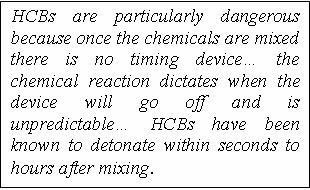
Homemade Chemical Bombs (HCBs) are easily constructed out of every-day materials and chemicals. The internet is loaded with video clips and instructions for such activity. HCBs are also known as MacGyver bombs, bottle bombs, “the works” bomb or acid bombs, are explosive devices created by mixing volatile household chemicals, usually in some type of pressure vessel. Toilet bowl cleaner or drain cleaner and tin foil mixed in a capped soda pop bottle are among the most common, and perhaps the most toxic, combination of materials. The mixture of isopropyl alcohol and chlorine or dry-ice and warm water and mixed in a capped water bottle yield a similar result. Regardless of the combination, the products are mixed together and placed in a soda pop bottle or other container suitable to containing pressure. The container eventually ruptures violently resulting in overpressure, fragmentation, shrapnel, and often times hazardous materials.

Indicators:
Callers to 9-1-1 reporting HCB events often report an “explosion”, “fireworks”, or “shot gun fire”. Surveillance data from various sources provide a fairly descriptive profile for HCBs. The chemicals most often used are sodium hypochlorite, sodium hydroxide, and hydrochloric acid. A majority of events occur on school property; such as local schools, college or university settings. HCB events have been reported in public places and residential areas. A majority of events occur during the summer or during after-school hours. There is however, no formal data base for this type of activity and numerous events may go unreported or unrecognized.

HCBs are particularly dangerous because once the chemicals are mixed there is no timing device… the chemical reaction dictates when the device will go off and is unpredictable… HCBs have been known to detonate within seconds to hours after mixing.HCBs can be constructed using a variety of chemical mixes and any container capable of allowing pressure build-up. Common containers are plastic soda pop bottles, sports drink bottles, and water bottles of all sizes. These containers have a screw-on cap and expand to allow for containment of greater pressure prior to detonation. The liquid inside the container may be green, bluish, or clear, depending on the chemical and may have tin foil rolled into balls or folded into strips inside the liquid. Regardless of the type of material; the liquid may be fuming as the chemical reaction takes place.

As the reaction progresses the container will begin to bulge or expand. Due to the variable amount of chemicals, each HCB should be considered unique and unpredictable. Containers that are bulging should be considered volatile and may detonate at anytime. It is possible that a pressure within a container will build-up to the point of expansion, yet not rupture. Any movement of a container in this condition may cause it to detonate.

Containers may be wrapped with nails or placed inside of a garbage can to produce shrapnel and fragmentation. Responders should be alert for bulging discarded containers.

Once a HCB has detonated, the residue varies with the chemicals used. The use of cleaning solutions and tin foil usually produces a foaming blue or green liquid (depending on the manufacturer of the cleaning product). HCBs made with alcohol and chlorine may leave only the smell and a cloud of the product. Dry-ice and water will totally disintegrate. In either case, the remains of the container may be the only indicator or evidence a HCB has gone off.

Injury Patterns:
Assuming that the HCB is a simple act of vandalism is a serious mistake. These devices meet both the National Fire Academy (NFA) and National Fire Protection Association (NFPA) definition of an explosive device. All of the chemical combinations used for HCBs are capable of causing deflagration and result in an overpressure situation. Although unlikely to cause serious structural damage or fire, HCB situations may result in primary and secondary blast injuries. Primary blast injuries result directly from the sudden overpressure changes caused by the blast. This overpressure is most likely to effect hollow structures such as the lungs, gut, and ears. HCB events often occur in open areas resulting in limited overpressure; rupture of the ear drums may be the most common of the primary injuries. It is important to remember that overpressure events are magnified by confined or enclosed spaces and an HCB detonated in confined areas should make one suspicious for other primary overpressure injuries. Responders should be aware that as little as 1.0 - 5.0 psi overpressure is sufficient to break windows and rupture tympanic membranes.

Secondary blast injuries are those injuries resulting from flying debris or shrapnel. HCBs are capable of scattering shrapnel and producing secondary injury. Mechanical and thermal injury may also result from the device going off as it is picked up by a responder or civilian. Keep in mind the person making the bomb may become an unintended victim.

HCBs are particularly dangerous because once the chemicals are mixed there is no timing device. The lack of fuses or timers means the chemical reaction dictates when the device will go off and is unpredictable. HCBs have been known to detonate within seconds to hours after mixing. Sodium hypochlorite is a frequently used chemical in making an HCB; however, other hazardous materials (ammonia, liquid nitrogen, and dry ice) may also be used (CDC unpublished data, 2003). Low to medium exposure to sodium hypochlorite, as found in household bleach, can cause irritation of the eyes, skin, and respiratory system. High levels can result in severe corrosive damage to the eyes, skin, and respiratory system and may be fatal. Exposure to other HCB products, such as hydrochloric acid can cause mucous membrane irritation laryngeal spasm and pulmonary edema.

Patient care should be dictated by injury severity, signs and symptoms, and local hazardous materials protocol. Responders should be anticipating the possibility of numerous patients, and thus be ready to undertake triage actions. There may also be need for gross decontamination at the scene prior to transport of any patient. Persons exposed the products of HCBs may also self-refer to local hospitals. Hospitals should be alerted whenever a HCB event is discovered in effort to prevent self-referring patients from contaminating the emergency department. Fire departments should be prepared to respond to local emergency departments in anticipation of decontaminating self-referring patients. Decontamination of patients prior to transport and prior to entering the emergency department is vital to preventing secondary contamination of the hospital. This role should be assigned to fire service personnel with training in decontamination or hazardous materials teams.

Summary:
Homemade chemical bombs (HCBs), also known as acid bombs, MacGyver bombs, bottle bombs, or “the works” bombs, are capable of creating chemical, thermal, and mechanical injuries. HCBs are unpredictable and may go off within minutes to hours after mixing. When deployed in public places, HCBs may create multiple patient – hazardous materials events resulting in the need for mass casualty gross decontamination both at the scene, and at the hospital. Patients must undergo decontamination prior to transport, but exposed persons may leave the scene prior to arrival of fire or EMS units. Fire departments must be ready to deploy to local emergency departments anticipating self-referring exposed individuals and preventing secondary contamination of the emergency department.

In addition to suitable personal protection, responders must be ready for hazardous materials and cautious of secondary events.

Underestimating HCBs as an act of vandalism can be deadly. These devices are capable of spreading shrapnel and fragmentation; turning a soda pop or water bottle into a deadly device. The unpredictable nature of HCBs, relative ease of construction, and combination of hazardous materials makes homemade chemical bomb events a true threat to responders and a challenge to successful patient care.

Implementing the All-Hazards Approach to training, pre-planning, and incident management will assist traditional response agencies with identification and successful mitigation of this type of event.

Selected Case Studies:
Rhode Island, May 2000. Two students were making bottle bombs on an elementary school playground using hydrochloric acid. The two students sustained eye irritation from the detonation of one of the bombs. Both were transported to a hospital for treatment and released. The school was evacuated for one-hour while a hazardous materials team conducted decontamination and debris removal.

Rhode Island, October 2001. A high school student placed a chemical bomb in a vacant classroom. The bomb, made with sodium hypochlorite, released chlorine gas on explosion. A total of twenty-three persons in the vicinity of the explosion sustained respiratory irritation and were transported to a hospital for treatment and released. The school was evacuated, and a HazMat team conducted decontamination and debris removal.

New York, June 2002. A sixteen-year-old sustained chemical burns after detonating a bottle bomb made from sodium hypochlorite in a friend’s front yard. The juvenile was transported to a hospital for treatment and released.

Rochester, NY, April 2004. Several persons, including emergency responders were contaminated with by-product acid as an acid bomb detonated while a suspect was being taken into custody.


References:
1. Agency for Toxic and Disease Registry, Hazardous Substances Emergency Events Surveillance System biennial report, 1999-2000. Atlanta, Georgia: U.S. Department of Health and Human Services, Agency for Toxic Substances and Disease Registry, 2001. http://www.atsdr.cdc.gov/HS/HSEES
2. CDC NIOSH, U.S. Department of Health and Human Services, CDC, 1997. http://www.cdc.gov/niosh/npg/npg.html
3. New Jersery Department of Community Affairs, Division of Fire Safety. Bottle Bombs, Trenton, New Jersey, 2003. http://www.state.nj.us/dca/dfs/bombs.htm
4. R. Russotti. Blast, Crush and Overpressure Injuries, April, 2003. rrussotti@frontiernet.net, http://mitigationjournal.blogspot.com/

Keywords:
1. Bottle Bomb
2. Baby Bottle Bomb
3. MacGyver Bomb
4. Acid Bomb
5. “The Works” Bomb
6. Homemade Chemical Bomb

May 19, 2006

Play Your Position, Please.

The EMS News network is sadly reporting the deaths of two Paramedics in British Columbia, Canada.

As reported in the Vancouver Sun: “two paramedics -- Kim Weitzel, 35, and Shawn Currier, 21 responded for some type of mine accident - When a mining contractor mysteriously disappeared at Teck Cominco's Sullivan mine, a second man was sent to look for him.”
He found the contractor's body.
The man led two other rescuers to the body.
All three died.
Early unconfirmed reports indicate the possibility of an oxygen deficient atmosphere and exposure to hydrogen sulfide contributing to the deaths of the contractor and the Paramedics.

Know your district, know your limitations.
EMS personnel typically do not have respiratory protection to enter an immediately dangerous to life/health (IDLH) atmosphere. The best, and in many cases only protection, for EMS personnel is to have situational awareness and understand the potential hazards of any given response area. Complacency kills.

EMS has a vital role in rescue operations. EMS services that are not associated with fire/rescue services may respond to find situations to be different than reported. Failing to recognize the hazards and taking appropriate self-protective measures can be devastating. When arriving to find a previously unreported hazard, the EMS crew first on scene can provide vital information and should call for appropriate response.

Our thoughts and prayers are with those in B.C. Canada.

This Plan is Your Plan; This Plan is My Plan.

We’ve been looking down the barrel of a loaded “pandemic gun” all winter. We’ve been meaning to do something abut biological preparedness since West Nile Virus, Anthrax, and SARS (what I have no idea). So, here comes spring and were guided ever so gently by the media away from flu (avian or otherwise) and pointed towards gas prices, immigration, and the ‘who’s who’ list of ex-Bush team members. Although not without good reason and some value, we’ve forgotten about the “pandemic gun” or maybe just because the weather is warm here we figure that gun is no longer loaded.

Its spring; Do You Know Where Your Plans Are?
Just because we’re out of the typical flu season is no rationale whatsoever to put planning and training for such an event on the back burner. Numerous updates have surfaced in the last few weeks. Perhaps the most striking (if only in volume) is the Pandemic Influenza Implementation Plan published by the Department of Homeland Security in early May, 2006. The object of this plan is to outline the governments effort to prepare for pandemic influenza and identify the critical roles of state and local authorities, private sector, and communities to address the threat of a pandemic. I’ll be conducting a review of the DHS plan shortly. You may recall the Department of Health and Human Services issued their own Pandemic Plan in November, 2005. Please see Mitigation Journal archives for November 2005 for my review of the HHS plan.

I’ve been asked a number of questions recently pertaining to planning, preparedness and response capabilities. There is no easy way to address many of the questions. The sad fact is; that despite effort and dollars; most plans in most jurisdictions fall short of reality. The overtone seems to be that the health care community and public health are going in one direction and traditional response groups are not going anywhere at all when it comes to planning for a biological event.

Each of the plans I’ve reviewed share a number of pitfalls. These plans assume:

1. The ability to communicate will not be disrupted and accurate/factual information will flow
2. Power and transportation will be readily available
3. Personnel will be healthy enough and willing to report to work
4. Civil obedience will be maintained both in the community and at health care facilities
5. Patients will be able to be evacuated to neighboring facilities or regions.

In addition, these plans do not mention the fact that every-day emergencies will continue to come to hospitals expecting treatment.

Let’s take a look at each one of these at its own context.

Communications.

Each plan assumes that there’s going to be the ability to communicate. And further, the ability to communicate will be undisturbed throughout any given event regardless of the length or scope of that event. It is reality however; the day-to-day communication is difficult to maintain even under ideal conditions. Case studies of numerous large scale events in history of all services indicate the communications will be among the first piece of infrastructure to be compromised. Further, the ability to rely on information from any given point must be questioned. When communication systems have failed or are compromised alternate means of communication will spring up; and it is these alternate means of communications that will lend a false sense of communications security and ultimately yield unreliable and inaccurate information on which decisions will be made.

Emergency plans also indicate their reliance on power and transportation with little or no mention of alternate means of supplying electricity, light, heat, or a means of moving people from place to place. The reliance on public energy and public transportation are critical weak link in the disaster and emergency planning process. Power in transportation are linked together in the disaster planning setting; in any given instance if we have and reliable and hardened power infrastructure capable of producing climate control, light, and maintaining critical operations in a given facility we can reasonably assume that facility will remain habitable and functional during crisis. If the power supply is threatened or lost we will no longer be capable of sheltering in place throughout the crisis in decisions will have to be made concerning evacuations and alternative sheltering. Should the need arise to evacuate a given facility, especially a Healthcare facility such as nursing home or hospital, there will be our reliance on emergency medical service transportation to effect such an evacuation. EMS transportation vehicles may or may not be available in such a situation. One must understand that all traditional response groups, including emergency medical services, will have their resources stretched to capacity and beyond. Air and ground transportation units will be subject to the same problems of fuel, power, and communications disruptions as fixed facilities. Alternate means for power supplies and shelter in-place needs must be addressed by fixed facilities in addition to evacuation contingency planning.

Another fatal flaw in emergency planning is the assumption that personnel will in fact report to work. This consideration must be taken without regard to the status of roadways and transportation. A survey study conducted by Columbia University in September, 2005 demonstrates possibility of personnel, who are otherwise unaffected by crisis, refusing to report to work. In this study, health care workers were asked to indicate if they would be able to report for work or willing to report for work in the event of a mass casualty incident. 81% said that they would be able to go to work if there was an environmental disaster, yet only 69% said they would be able to go to work during a small pox epidemic. The study goes on to note that the willingness to report for work would only be 48% of health care workers during a SARS outbreak. Further, only 57% of health care workers would return to work in the setting of a radiological event. The fallacy in this stage of planning is to assume that Healthcare workers who have a perceived obligation to respond will, in fact report to work. Numerous sources have noted that the willingness to report for work in any situation may be impacted by concerns for the safety of the responder’s family. It is important for employers of public and private organizations to understand that the family care can be as vital as responder care. Workers fears will impact their willingness to work and administrators and company leaders must talk to their workers about these concerns regarding exposure and contamination and reassure them by planning to assure family and dependent safety. An example of such contingency planning would be the setting of avian flu or H5N1 pandemic. It is estimated in such a situation that nearly 30 to 40% of the American workforce would become stricken or ill and unable to report for work of any kind. And that percentage the number of persons engaged in critical infrastructure duties such as police, fire department, EMS, or other critical infrastructure positions failing to report for work and any given crisis situation can then be expected to be magnified.

In the above mentioned settings simple failures in the supply chain for routine maintenance can become catastrophic.

Another important point to consider is that of the lack of surge capacity in the concept of ripple effect deaths. Surge capacity is a specter of imagination as many Healthcare systems operate at or above capacity every-day. Just as the traditional response groups will continue to respond to the routine calls for service during a large scale event, routine requests for routine medical emergencies will continue to arrive at local hospitals. Lacking surge capacity will almost certainly cause some of these otherwise routine patients to destabilize and become critical or fatal. This can add to the death toll of any large scale event and further destabilize community infrastructure. Much attention has been given to triage in the appropriate use of medical resources such as ventilators. Triage of such medical procedures and devices is also unrealistic; consider that just a short time ago the health care community could not come to consensus on the triage of flu vaccine during a shortage and without the pressure of an actual event going on.

This Plan is Your Plan; This Plan is My Plan. Not.
Despite the fact that numerous of urgency service agencies and Healthcare systems have spent countless hours and dollars on the planning process few if any of these plans integrate with each other. There is little if any continuity between traditional response groups and Healthcare systems or any other community infrastructure for that matter. Failure of any agency or service to adopt or even recognize the existence of the national incident management system or NIMS will be the cornerstone of failure during a large scale event. Scant few services, either public or private, address, and planning needs or participate in any level of joint training. This unfortunate situation is perhaps the least expensive and easiest to implement, yet remains ignored.

What do we do now?
There are no clear-cut answers in any of these situations. However failure to acknowledge that such shortcomings exist in the planning process may themselves the largest obstacle to overcome. The setting of a biological vent weatherman made intentional or natural cannot be compared to acts of terrorism the American public has become familiar with. Any naturally occurring biologic event or intentional act of biological terrorism will force our change in perspective.
The good news is we have been dealing with biological events for quite some time. We have come to no and rely upon basic medical personnel protective equipment and procedures such as hand washing and respiratory etiquette. These protective measures which we employ every day will serve us well in the setting of a biologic event.